
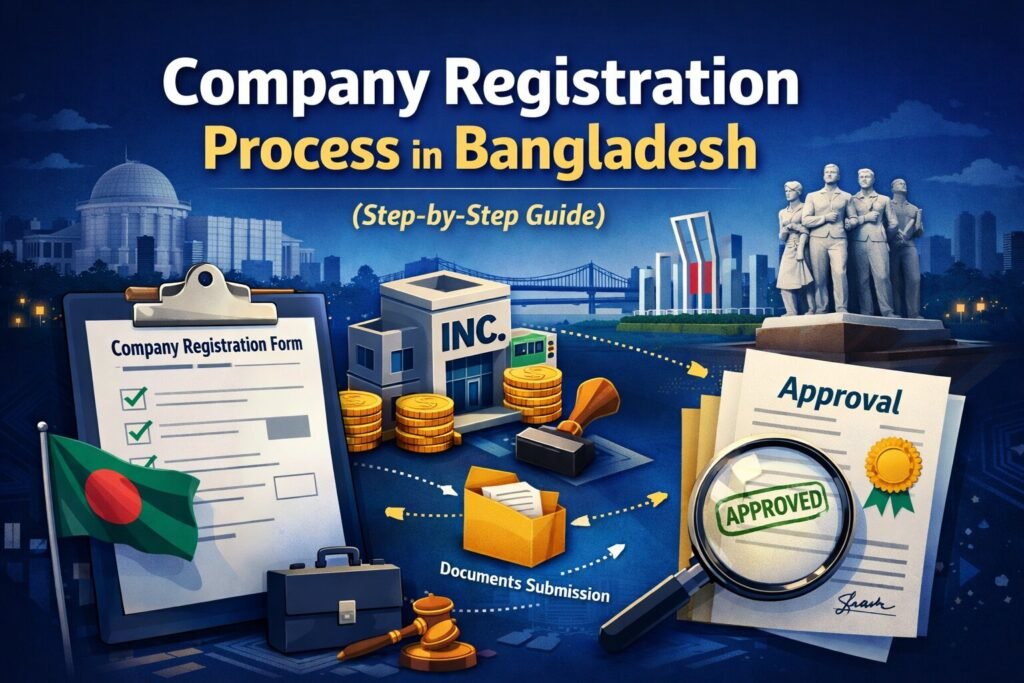
In Bangladesh, any business must be legally registered to commence its operations and gain the confidence of its customers, banks, and the government. Registration of a company guarantees a business as a legal entity, and it is also able to engage in commercial operations in accordance with national laws. The Registrar of Joint Stock Companies and Firms (RJSC) is the principal party in charge of the process. The process consists of several steps and documents. However, it is simple when correctly comprehended. Legal Advice BD is here with the company registration process in Bangladesh! Keep reading!
Why is Company Registration Important?
Incorporation of a company offers legal status and enables the businesses to have a presence in the formal economic system. Some major benefits include:
- Legal security of business owners.
- Opening a corporate bank account.
- More credibility among clients and partners.
- Availability of loans and finances.
- Qualification to take part in government tenders.
Lack of registration can lead to legal issues and a lack of ability to develop its operations. The personal liability of the owners and the business is also not linked in a registered company, and this is a major benefit to entrepreneurs.
Types of Companies in Bangladesh
Entrepreneurs have to decide on the right company structure before starting the registration process. Examples of the common types of companies are:
- Private Limited Company
- The most common type of business.
- Needs a minimum of two shareholders.
- Small and medium businesses are appropriate.
2. Public Limited Company
- Public share investment is allowed.
- Needs more shareholders.
- Appropriate for large business enterprises.
3. One Person Company (OPC)
- It is aimed at individual business persons.
- Permits one shareholder to run the company.
Small businesses and most startups choose the private limited type of company structure because of its flexibility and the less complicated compliance protocols.
Step-by-Step Guide for Company Registration Process in Bangladesh

Step 1: Name Clearance from RJSC
The initial process of registering a company is the clearance of names with the Registrar of Joint Stock Companies and Firms. This is done so that the name of the proposed company is not already taken by some other business. The clearance process includes the following:
- Registering the suggested business name on the internet.
- Finding the availability in the RJSC database.
- Meeting the necessary government fee.
The name is registered on a limited basis. Once approved, the incorporation process has to be done within the period. The registration process can be delayed because of an obscure and unrecognizable name. A clear and distinctive name should be used.
Step 2: Writing of Memorandum and Articles of Association
The second stage is to develop legal proceedings that outline the organization and the working regulations of the company.
Two documents are needed:
- Memorandum of Association (MoA)
- Determines the goals and areas of operation of the company.
- Defines information on shareholders and capital structure.
2. Articles of Association (AoA)
- Incorporates the regulations of the internal activity of the company.
- Explains the duties and obligations of directors and shareholders.
These documents should be very well prepared as the legal basis of the company. Legal services are also sought out by professionals to be sure they do not go against corporate rules.
Step 3: Submission of Documents to RJSC
The legal documents have to be provided to the RJSC after being prepared and accompanied by other information that would be required. Some of the common documents required are:
- Memorandum of Association
- Articles of Association
- Name of shareholders and directors
- Registered office address
- Name and address of company owners
All the documents are placed via the RJSC online registration system. Once applications are submitted, the authority will examine the application and check the information supplied.
Step 4: Receiving Certificate of Incorporation
In case the application satisfies all the legal requirements, the Certificate of Incorporation is issued by the RJSC. This certificate is an assurance that the company has been registered as per the Bangladeshi law.
The certificate includes:
- Registration number of the company
- Date of incorporation
- Company entity recognition by law
After the certificate is issued, the company then becomes an independent legal entity that can transact business activities. This is among the most significant entries of registration.
Step 5: Opening a Corporate Bank Account
Once it has been incorporated, the company has to open a corporate bank account in Bangladesh. This account is used for:
- Making up front share capital
- Managing operational funds
- Making financial transactions
The following documents are usually required at the banks:
- Certificate of incorporation.
- Memorandum and Articles of Association
- Director identification documents
- Board resolution and company seal
The opening of a corporate bank account will secure appropriate financial management and the acceptance of the banking regulations.
Step 6: Trade License registration
Businesses operate in a particular city or municipality with the help of a trade license. It is the local City Corporation or Municipal Authority that issues the license. To be granted a trade license, a company requires:
- Documents of registration of the company
- Office address information
- Details of business activity
The trade license should be renewed on a yearly basis. This license assures that the business is licensed to operate under the specified jurisdiction.
Step 7: Tax registration (TIN and VAT)
Once the registration of a company is done, a trade license is obtained, it is followed by tax registration. Companies have to receive a Tax Identification Number (TIN) from the National Board of Revenue (NBR).
Other possible registrations can be:
- Registration of VAT in case the company deals with taxable goods or services.
- Corporate earnings income tax compliance.
The registration of taxes makes sure that the company is in a position to execute commercial activities and pay taxes as required by the law.
Conclusion

At the helm of Legal Advice BD is our esteemed Managing Partner, Advocate Nashir Ahmed Kushol. With a passion for the law and an unwavering commitment to client success, Advocate Kushol’s leadership has been pivotal in shaping the firm’s legacy. His expertise and proactive approach to legal challenges ensure our clients are always in safe hands.