
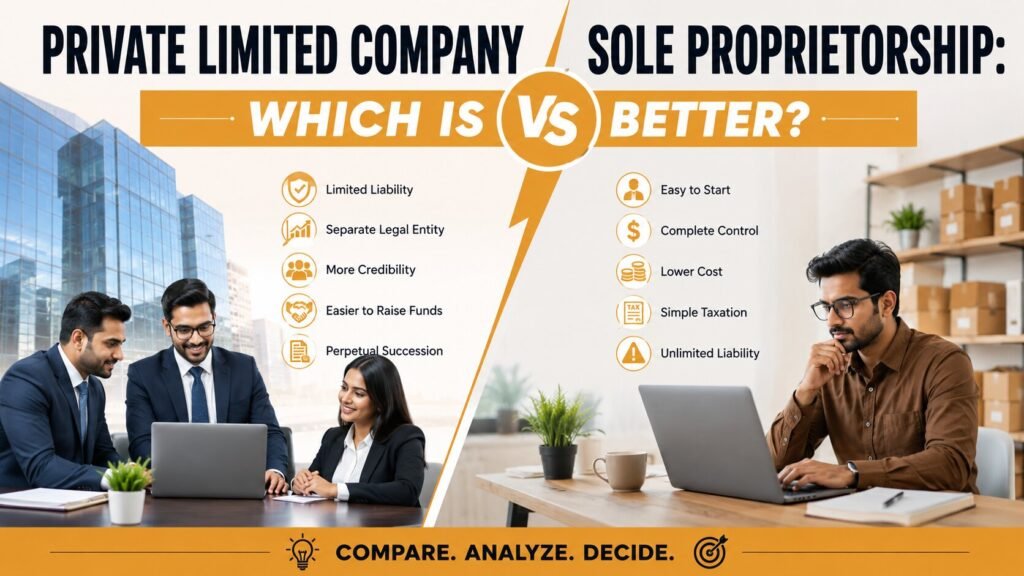
One of the most vital decisions you can make as an entrepreneur is the choice of the business structure you adopt. The most prevalent business structures in Bangladesh are Private Limited Company and Sole Proprietorship. Both have their own strengths based on your business objectives, investment strategy and long-term goals. A sole proprietorship is simple to start and run but a private limited company offers legal security and credibility.
legaladvicebd.com is here to answer the most common question, ‘Private Limited Company Vs Sole Proprietorship: Which is Better?’
Understanding the Business Structures in Bangladesh
Entrepreneurs need to know about the various types of business structure before registering a business. You will be impacting the tax, legal, ownership, financing and growth of your business.
Sole Proprietorship: Owned by one person and operated by one person. It is one of the easiest options for business in Bangladesh and many small businesses, retailers, freelancer, consultants and local services providers use it.
A Private Limited Company: A company that has a separate legal entity and has been registered under the Companies Act, 1994. It is owned by shareholders and governed by the directors, and so it is appropriate for companies that will develop or expand into larger markets or generate interest from investors.
What is a Sole Proprietorship Business?
A sole proprietorship is a business owned by one individual. The business and the owner are indistinguishable; the owner gets all the profits, and is personally liable for all debts and liabilities.
This business structure is favored because it is simple to establish, has minimal paperwork and lower registration expense.
Key Features of a Sole Proprietorship Business
- Property belonging to a single person.
- Easy and inexpensive to establish.
- Simple management structure.
- Owner makes decisions regarding the business.
- If the business income is realized, it is considered to be income of the owner.
- Unlimited personal liability.
While a sole proprietorship is flexible, it may not be a good option for businesses looking to expand quickly or attract outside investment.
What is a Private Limited Company?
A Private Limited Company is a legally registered company and has its own legal identity. The company is independent of its shareholders, and it can own buildings, enter into contracts, and carry on operations regardless of the transfer of its ownership.
The shareholders of a business have limited liability, which means that their personal assets are normally not affected by the debts of the business.
Key Features of a Private Limited Company
- Separate legal entity.
- Limited liability for shareholders.
- Ownership through shares.
- Managed by directors.
- Simpler to get investors.
- Greater business credibility.
- Improved prospects for long-term development.
These benefits make many startups and expanding businesses opt for private limited company registration.
Private Limited Company Vs Sole Proprietorship: Key Differences
Ownership Structure
A sole proprietorship is a business owned by one person who makes all the decisions about the business and how it operates. On the other hand, a private limited company can have many shareholders, who can all own the company, making it easier to share ownership and to recruit new shareholders.
Legal Identity
There is no legal separation between a sole proprietorship and its owner. This implies that the business and the owner will be legally deemed as one. Unlike a private limited company, however, a private company is a legal entity distinct from the company’s shareholders, and it can have property, enter contracts, and continue to exist without any involvement of the shareholders.
Liability
A private limited company has many benefits, the most notable being limited liability. The shareholders normally contribute only the amount invested in the company. The owner of a sole trader business is liable for all the debts of the business if they need to be paid, this is called unlimited liability.
Registration Process
It is not difficult to establish a sole proprietorship and involves much less formalities. A private limited company is a more formalised company incorporation process with Registrar of Joint Stock Companies and Firms (RJSC), the name clearance process, preparation of legal paperwork and company registration.
Funding Opportunities
Businesses owned by a single person usually depend on such funds as their own savings or bank loans or family assistance. If the business is expecting to expand, it will have more options available to it if it becomes a Private Limited Company, such as issuing shares or inviting new investors.
Business Continuity
A sole proprietorship is directly associated with its owner, and can be discontinued in the event the owner retires or dies. Private Limited Company has the characteristics of perpetual succession, that is, the company will continue to exist even if the shareholders and directors change.
Compliance Requirements
The compliance requirements are less than for a sole proprietorship, which makes it easier to manage. A Private Limited company has to keep statutory documents, convene Board meetings as necessary, submit Annual Returns and abide by the Companies Act 1994. While compliance is a more complex process, it can also enhance transparency and corporate governance.
Business Credibility
Private limited companies are more trustworthy to many clients, investors, suppliers and financial institutions as they have a regulated corporate structure. A private limited company may be better suited to long-term business growth and provide greater trust in small businesses, whereas sole proprietorships are suitable in small businesses.
Advantages of a Sole Proprietorship Business
For many business owners, the simplicity of a sole proprietorship is the best option. Some of the significant advantages are:
- Simple and convenient registration
● Full decision-making authority
● Fewer regulatory requirements.
● Lower operating costs.
● Faster decision-making.
● Simple tax management.
It’s ideal for freelancers, consultants, home businesses, and small retail stores.
Advantages of a Private Limited Company
A private limited company has several long-term benefits, which make it interesting for growing companies.
Key benefits include:
- Limited liability protection.
- Limited liability protection.
- Limited liability protection.
- Strong business credibility.
- Faster, more convenient access to investors.
- Better financing opportunities.
- Perpetual succession.
- Greater expansion opportunities.
- Easier ownership transfer.
- Stronger corporate image.
Incorporation can be more solid for businesses that have plans for expansion into other nations or regions.
Drawbacks of a Sole Proprietorship Business
Establishing a sole proprietorship is easy, but there are a number of drawbacks that could hinder long-term business development.
Typically, some of the drawbacks are:
- Personal liability for the debts of the business is unlimited.
- Lack of investment or outside financing.
- Lack of continuity in business in the event of the owner’s retirement or death.
- Reduced trust and confidence of investors and corporate clients.
- The financial and management abilities of the owner are sometimes the sole basis for business expansion.
These restrictions can be non-threatening to small businesses in the beginning but can prove to be problematic as the company grows.
Drawbacks of a Private Limited Company
While there are numerous benefits to having a private limited company, there are also other responsibilities and compliance standards to consider.
Some drawbacks include:
- Incorporation and registration process are more complicated.
- Increased installation and operating expenses.
- Compliance and filing requirements.
- Greater administrative responsibilities.
- In addition to the filing of a sole proprietorship, additional documentation is required.
However, even though there are a number of difficulties, several people still find these requirements worth their while due to the benefits of having them.
Which Business Structure Should You Choose?
The right one will be determined by the goals of your business, finances and future plans.
A sole proprietorship is the best option when you:
- Desire them to begin their own small business in a rapid manner.
- Like to have full control over operations.
- Have a meager amount of capital to start a business.
- Work as a freelancer, consultant or local retailer.
- Neither shall you intend to attract external investors.
A private limited company is a better option if you:
- Plan to grow your business in the long run.
- Desire to safeguard personal possessions.
- Intend to attract investors or business partners.
- In need of greater cred ability in banking or corporate situations.
- Be prepared for expanding into national and/or international markets.
The initial choice of structure can save both time and the costs of your business as the company expands.
Things to Keep in Mind before Choosing Any Option
Assess your needs and future objectives prior to registering your business. Take into account the following:
- Nature and size of your business.
- Available startup capital.
- Number of business owners.
- Risk associated with the business.
- Long-term expansion plans.
- Funding requirements.
- Regulatory compliance responsibilities.
- Tax and legal requirements.
Taking these factors into account will help you choose a structure that aligns with your business goals and reduces future issues.
Conclusion
A private limited company and sole proprietorship offer distinct benefits, depending on your business objectives. A sole proprietorship could be an easy and inexpensive method to commence a small enterprise if you are searching for a very basic and inexpensive way. But if you are interested in long-term growth, attracting investors, safeguarding your personal assets, and establishing a credible business, a private limited company is a much better option. The differences will help you make the right choice and have a better base to build on when trying to achieve any future success.
Hopefully, you got the answer to your question,‘Private Limited Company Vs Sole Proprietorship: Which is Better?’

At the helm of Legal Advice BD is our esteemed Managing Partner, Advocate Nashir Ahmed Kushol. With a passion for the law and an unwavering commitment to client success, Advocate Kushol’s leadership has been pivotal in shaping the firm’s legacy. His expertise and proactive approach to legal challenges ensure our clients are always in safe hands.